

Details of what must be done if human remains or buried treasure are discovered during the construction of a facility to tackle loneliness in Addingham have been published.
Last year Bradford Council refused planning permission for a workshop to be built on the grounds of St Peter’s Church in the village, arguing the development would have the potential to disturb “Anglo-Saxon archaeology.”
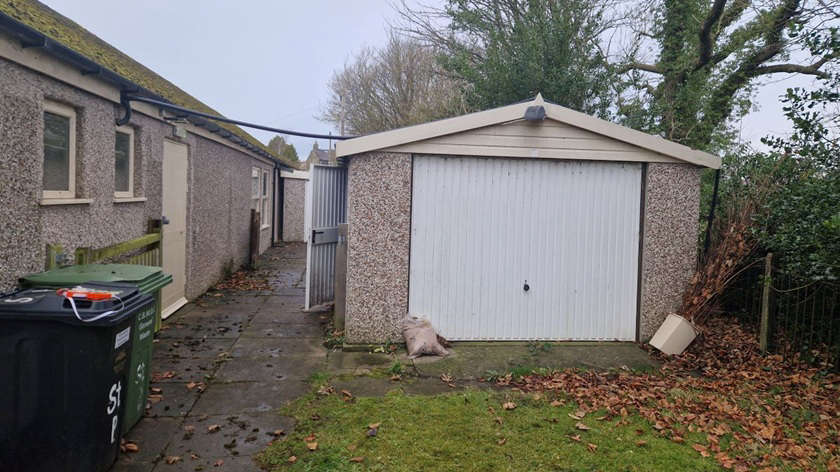
Dubbed The Shed Project, the workshop would replace some existing storage buildings on the site, and would encourage people to get together to carry out tasks like building bird boxes and repairing cherished items.
It would be aimed at people who are retired, unemployed or who live alone.
But planners pointed out that the area was one of the oldest recorded settlements in the Bradford District – and the application had little information on how the project could impact potential undiscovered artefacts on the church grounds.
The application had been submitted by the Parochial Church Council.
The applicants have now submitted a new application for the works, which includes a report from the West Yorkshire Archaeology Advisory Service.
This report includes precise details of the history of the area, and what should be done if artefacts are discovered during construction:
“Addingham is one of few places in West Yorkshire to have been documented before the Norman Conquest; the -ingaham element in the place-name suggests the name was formed in the early Anglo Saxon period.
“In the 11th century, Symeon of Durham describes how Archbishop Wulfhere of York sought refuge at Addingham in A.D.867. Addingham was part of the Archbishop’s Otley estate in the late 10th century, and will almost certainly have contained a hall and church in keeping with this status.
“The potential for locating Anglo-Saxon settlement is perhaps greater on the knoll now occupied by church and rectory which lie outside scheduled area.
“This site, just above south bank of Wharfe would be a more likely place for a settlement than the lower ground prone to flooding. This location would have been sought after in earlier periods (a probable Iron Age ditch was found during previous excavation).
“The archaeological interest of the site primarily relates to the known burials on the site which date to the Anglo-Saxon period the most recent investigation of these was undertaken by the West Yorkshire Archaeology Service on behalf of English Heritage during 1989 and 1990.
“Excavations at that time identified a total of 55 graves which yielded the remains of perhaps 80 individuals.
“As the site has contained buried remains of bodies in the past a burial licence will be required before work starts on site.”
It says the advisory service should be contacted if any major finds are discovered.
The report adds:
“All finds must be stabilised and packaged in accordance with the requirements of the receiving museum.
“Any human remains that are discovered must be recorded in situ prior to lifting, WYAAS will be notified at the earliest opportunity. If remains are discovered the remains must be excavated archaeologically in accordance with the CIfA Technical Paper 14 “Excavation and Post-Excavation Treatment of Cremated and Inhumed Remains (McKinley and Roberts 1994).
“The treatment of human remains will be in accordance with Guidance for Best Practice for Treatment of Human Remains Excavated from Christian Burial Grounds in England.”
Referring to the potential that buried treasure might be found on the site, the report says:
“Any finds must be removed to a safe place and reported to the local coroner.
“Where excavation cannot be carried out on the same working day as the discovery, suitable security measures must be taken to protect the finds from theft.”
A decision on the planning application is expected in June.
 Plans for 100 new homes at Great Pasture Lane in Burley in Wharfedale
 Boulder-shaped house approved for Ilkley Moor following planning appeal
 ABBA tribute and fireworks set for Ilkley Bonfire Bonanza
 Record-breaking Glitter Ball raises over £280,000 for children's hospice
 Ilkley BID shortlisted for two national awards
 Ilkley Christmas Lights Switch-On to return in November
 Ryanair announce new flights from Leeds Bradford Airport
 Winter DalesBus timetable changes announced for Ilkley
 Leeds Bradford Airport strikes suspended as fresh pay talks planned
 New Bradford railway station could benefit Ilkley passengers
 Historic Ilkley building begins new chapter as Verbeia Grange opens
 Inherited jewellery: where do you start?
 MOVE Ilkley celebrates successful open afternoon
 Free Bonfire Night event returning to Ilkley Cricket Club
 Hundreds of new homes proposed for Ilkley and Addingham in Local Plan
 Yorkshire residents invited to apply for BBC's The Traitors
 Police appeal after Land Rover stolen near Ilkley
 Yorkshire Water issues reminder ahead of plastic wet wipe ban
 Martin House named Hospice of the Year at national awards
 Ilkley deli celebrates six years in business